


Courtyard - Trading Cards
4.2485.00 Reviews
App Specs
- Version
- 1.7.00
- Updated On
- License
- Free
- Downloads
- 100,000+
- Developer
- Courtyard.io
- Categories
- Shopping
- Platform
- Android
Screenshots
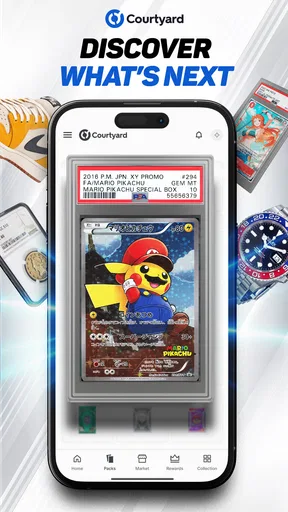
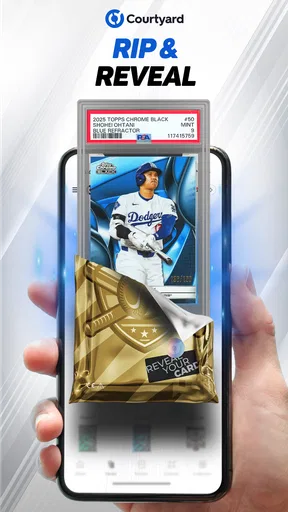
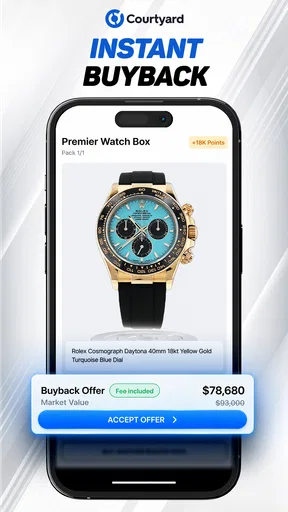
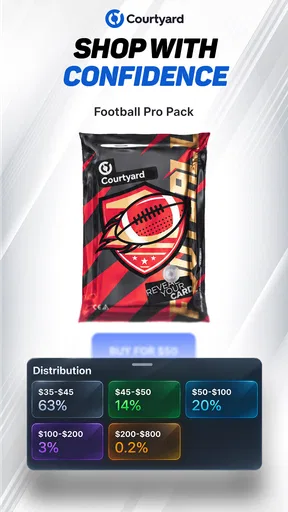
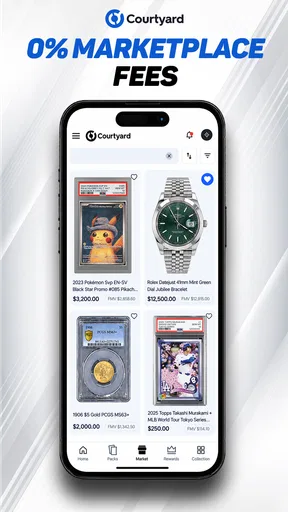
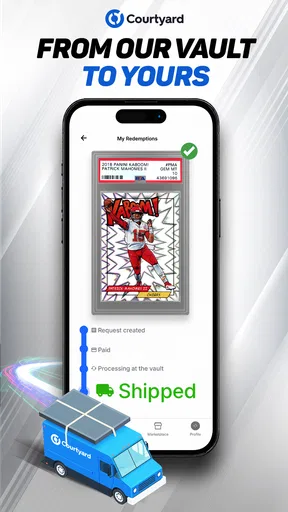
 Analysis by AppCompare
I approached Courtyard - Trading Cards as a shopping app for collectors rather than as a conventional marketplace, and that distinction matters. Its focus sits around Pokémon, baseball, NFL items, comics, and coins, so the appeal is easy to understand if you already enjoy physical collectibles and want a more organized way to follow them. In my experience, the app feels most useful when I treat it as part of a collecting routine, not as a replacement for every buying and selling platform I already use.
Courtyard.io is the developer behind this free app, which is aimed at mature users and runs on Android devices using version 7.0 or later. The current release is 1.7.00, and the app has built a noticeable audience, with over one hundred thousand installs and an average score of 4.2 from around two thousand six hundred ratings. Those figures suggest a service that has moved beyond the experimental stage, while still leaving room for the kind of refinements that collectors notice quickly.
How the current experience fits a collector’s routine
The first thing I like about this app is its subject matter. It does not try to be a general shopping destination filled with unrelated products. The categories point toward people who care about collectible value, condition, rarity, and long-term ownership. Pokémon cards may bring in newcomers, while baseball and NFL cards, comics, and coins give the app a broader identity than a single-franchise marketplace.
That range also creates the app’s first important trade-off. A specialist collector may appreciate having several interests in one place, but someone looking only for one exact card could find the wider catalog less direct than a narrowly focused marketplace. I would use it when I want to browse across collecting interests or keep an eye on different types of items, rather than when I already know the precise listing I want and need the largest possible search pool.
In a realistic everyday scenario, I can imagine opening the app during a lunch break to check collectible activity, save an item for later consideration, and compare the appeal of a card with a comic or coin I had not previously considered. That is a different rhythm from visiting a local card shop, where discovery depends on what happens to be in the display case, and it is also different from a general shopping app, where collectible items are mixed into a much larger catalog.
The free entry point is helpful because it lets a curious user explore before deciding whether this style of collecting fits. I would still approach any purchase carefully. A free app does not make collectible buying risk-free, and the emotional pull of a familiar character, team, or player can make it easy to act before checking whether an item actually suits a personal budget or collection plan.
Where it is stronger than ordinary shopping apps
General shopping services are convenient for almost everything, but they often treat collectibles as just another product category. Courtyard - Trading Cards feels more purposeful because its identity is built around collectible culture. That focus can make browsing feel less noisy, especially for a user who wants to move between Pokémon, sports cards, comics, and coins without starting from scratch on unrelated retail pages.
Worth Reading Before You Choose

EA SPORTS FC Mobile 26 Is a Bigger Football Game, but It Takes Time

Flipboard Shows What News Apps Must Do Beyond the Feed

Switching to Android Auto Means Rethinking Your Driving Routine

Google Calendar Makes a Crowded Week Easier to Manage

Ludo King Makes the Most of the Minutes Between Plans

Baby Panda World Brings Quick Play to Modern Phones, but Its Game Library Feels Busy
Another advantage is the mindset the app encourages. When I use a normal shopping app, I usually think in terms of price, delivery, and convenience. With a collecting-oriented service, I naturally pay more attention to why an item interests me, whether it complements what I already own, and whether I am buying for enjoyment or for possible future value. That shift is useful, although it should not be mistaken for a guarantee that any collectible will appreciate.
The most sensible way to use it is as a discovery and decision tool, not as an automatic investment guide. I would make a short list of items that genuinely fit my interests, pause before purchasing, and record why each one matters to me. This simple habit helps prevent a visually exciting listing from becoming an impulse purchase that feels less appealing a week later.
Small workflow choices that make browsing better
One practical approach is to divide browsing into three passes. On the first pass, I look only for categories or themes that fit my collection. On the second, I compare an item with things I already own, asking whether it adds variety or merely repeats the same idea. On the third, I decide whether I am comfortable with the purchase even if its future value never changes. This workflow is especially useful for Pokémon and sports cards, where nostalgia can make several similar options feel equally urgent.
A second useful habit is to keep a personal collecting note outside the app. I can write down the item, the reason I want it, and the maximum amount I am willing to spend before I return to the listing. That may sound overly cautious, but it gives the app a clear role: it helps me find and evaluate possibilities, while my own record keeps the collecting plan consistent.
For users interested in more than one category, I would also avoid judging the whole service after looking at only one section. A person coming for baseball cards may discover that the comics or coins area changes how they think about the app, while someone focused on Pokémon may prefer the narrower discipline of a specialist community elsewhere. The right fit depends heavily on whether variety feels useful or distracting.
What the latest release tells existing users
The current version, 1.7.00, is the clearest concrete sign of the app’s present stage. It shows that Courtyard.io is continuing to maintain and evolve the product rather than leaving it as a one-off catalog. I see that as encouraging for existing users, because collectible services need ongoing attention: search, browsing, account flows, and item presentation all become more important as the audience grows.
At the same time, a version number by itself does not tell me that every part of the experience has been transformed. I would not install this release expecting a completely different service simply because the version has advanced. The more reasonable expectation is a maintained shopping experience whose usefulness depends on the quality and relevance of the available collectible inventory.
For someone already using the app, the update is best judged by practical questions. Does it make browsing easier? Does it help you return to items you were considering? Does it reduce the effort needed to move between collectible categories? These are the changes that affect a real collection more than a new visual detail that looks impressive for a few minutes.
New users benefit from the same evolution in a different way. They can begin with a more established product than an early adopter might have encountered, while still forming their own opinion about whether the catalog and collecting approach match their expectations. I would recommend starting slowly, learning the browsing flow, and resisting the idea that installing the app means I need to buy immediately.
Where the experience still asks for patience
The biggest limitation is not necessarily a missing button or a particular screen; it is the uncertainty built into collectible shopping. A polished interface can make an item feel trustworthy and desirable, but it cannot replace personal research about condition, authenticity, demand, or the reasons a particular piece belongs in a collection. I would still compare information with specialist communities and established reference sources before making a meaningful purchase.
The app may also be a poor match for users who want the absolute broadest peer-to-peer marketplace. A general marketplace can offer more unrelated sellers and more unusual listings, while a specialist service may provide deeper discussion around one category. Courtyard’s multi-category approach is attractive for discovery, but it may not satisfy someone who needs a very specific card, edition, grade, or historical detail immediately.
There is also a psychological limitation worth mentioning. Collecting apps can turn a hobby into a constant stream of possible acquisitions. If I already struggle with impulse shopping, I would use this app with firm personal rules: a monthly limit, a waiting period, and a clear distinction between items I admire and items I truly want to own. The app can support a hobby, but it cannot supply the self-control that keeps the hobby enjoyable.
The mature age rating is another signal that this should be approached as a serious purchasing environment rather than a children’s browsing toy. Parents should not assume that an interest in Pokémon makes the entire experience suitable for younger users. I would treat account use, spending decisions, and collectible discussions as adult responsibilities, especially when a child is interested in the featured categories.
Who should use it, and who should look elsewhere
I think the app is a good fit for an adult collector who enjoys more than one kind of item and wants a dedicated place to explore possibilities. It is also suitable for someone beginning a collection who needs inspiration before choosing a narrow specialty. The combination of Pokémon, sports, comics, and coins gives that person a chance to discover a direction without committing to a single theme on the first day.
It is less suitable for a buyer whose only goal is finding the lowest possible price. Collectibles require context, and the cheapest listing is not automatically the best one. Someone who already has a trusted specialist marketplace, a strong local dealer network, or a highly specific search target may get more value from those alternatives than from a broader discovery app.
I would also advise skipping it if browsing collectible listings tends to encourage spending you had not planned. The free download removes an entry barrier, but the real cost of this type of app comes from the purchases it can inspire. In that situation, a physical inventory spreadsheet, a local club, or a read-only reference source may be a better first step.
Questions I would answer before installing
If you are wondering whether it costs anything to download, the app itself is free. That makes it reasonable to explore the categories and decide whether the experience suits you before treating it as part of your regular collecting routine. I would still separate the cost of access from the cost of any collectible decisions made through the service.
If you are asking whether it is only for Pokémon fans, the answer is no. Pokémon is one of the obvious entry points, but baseball, NFL items, comics, and coins broaden the audience. That variety is useful for collectors with several hobbies, although people seeking an extremely deep experience in just one niche may prefer a dedicated specialist service.
If you are concerned about device compatibility, the app supports Android 7.0 and later. That covers many older Android devices, but I would still keep the operating system updated where possible because shopping apps handle account activity and personal information. On an older phone, browsing comfort may depend more on the device’s performance than on the category itself.
If you are deciding whether the current release is worth trying, version 1.7.00 makes it a sensible point of entry for a new user. Existing users should focus less on the number and more on whether the current workflow improves their own collecting habits. I would not upgrade or install solely because of expectations about future additions; I would judge what is available now.
Finally, if you are asking whether the app can replace research, valuation knowledge, or a trusted collector community, I would say no. It can become one useful part of the process, especially for discovery, but I would keep independent checks in place. The more expensive or emotionally important the item, the more valuable that extra step becomes.
What I would watch as the product develops
For future releases, I would pay attention to how well the app serves both sides of its audience: the newcomer who wants simple discovery and the experienced collector who needs precision. Better support for comparing items, revisiting considered purchases, and organizing interests would make the multi-category structure more powerful without turning it into a generic retail app.
I would also watch whether the experience becomes more useful between purchases. A collector does not always want to buy something every time the app opens. Tools that help users understand their own collection, plan categories, or make more deliberate decisions could give the service lasting value and reduce the pressure to treat every visit as a shopping trip.
My overall view is positive but measured. Courtyard - Trading Cards has a clear identity, a useful spread of collectible categories, and a free starting point that lowers the risk of trying it. Its strongest quality is the way it brings a collector’s mindset to browsing, while its main weakness is that no app can remove the uncertainty and discipline involved in buying collectibles.
I would recommend it to an adult who enjoys Pokémon, baseball, NFL items, comics, or coins and wants a focused place to explore those interests. I would not recommend using it blindly as a price authority or as a substitute for specialist research. Used patiently, with a spending plan and a reason for every purchase, it can become a worthwhile part of a collection. Used impulsively, it can make browsing feel more urgent than it really is.
Pros
- Simple interface makes browsing and managing cards easy.
- Useful for organizing a personal collection in one place.
- Trading-focused design encourages interaction with other collectors.
- Card details can help users compare items before making a trade.
- Convenient mobile access to your collection wherever you go.
Cons
- The app may feel limited if your card series is not supported.
- Trading with others depends on having an active user community.
- Some features may require account registration or personal information.
- Collection values may not always reflect current market prices.
- Performance can vary on older Android or iOS devices.
FAQs for Courtyard - Trading Cards
What is Courtyard - Trading Cards?
Courtyard is a digital collectibles platform focused on trading cards and other collectible items. It allows users to discover, buy, sell, and manage tokenized cards through a mobile-friendly marketplace. The app is designed for collectors who want access to digital ownership, trading features, and collectible communities without handling a physical card inventory directly.
Do I need cryptocurrency or a blockchain wallet to use Courtyard?
Courtyard is built around blockchain-based collectibles, so some features may involve digital wallets, tokens, or blockchain transactions. However, the exact requirements can depend on the current app version, available marketplace functions, and your location. New users should review the onboarding instructions, payment options, and any wallet or network fees before purchasing a card.
Can I buy and sell trading cards through the app?
The platform is intended to let users browse collectible cards and participate in marketplace activity, including purchasing and potentially reselling eligible items. Listings, prices, availability, and transaction rules can change frequently. Before completing a purchase, check the card’s details, seller information, fees, ownership terms, and whether the item can be transferred or sold again.
Are the trading cards physical, digital, or both?
Courtyard primarily presents collectibles in a digital, tokenized format, while some items may be connected to physical cards or real-world collectibles held through the platform’s partners. The relationship between a digital item and any physical asset can vary by collection. Always read the individual listing and the platform’s terms to understand redemption, storage, shipping, and ownership conditions.
Is Courtyard - Trading Cards safe for beginners?
Courtyard can be approachable for beginners interested in digital collectibles, but users should still understand that collectible prices may fluctuate and transactions may include platform, payment, or network fees. Use a strong account password, enable available security features, and avoid sharing wallet credentials or recovery information. Start with a small purchase and verify every transaction before confirming it.


